 VapeWholesaleHub
Butterscotch Ice Clearance Strategies That Protect Margin — Cross-Border Trade
There is no clever trick to buying butterscotch ice well. There is a short list of things worth checking and a long list of things that distract from them. This page is an attempt at the short list.

The Specification That Matters
Specification sheets are where a butterscotch ice deal is won or quietly lost. Two samples can look and taste the same while using different coil wire, different wicking density and different tolerances on the mouthpiece. Those details decide how the unit behaves in week three rather than minute three.
Where possible, tie part of the butterscotch ice payment to inspection against the written spec. It focuses attention on the numbers rather than on the relationship.
| Product category | Closed pod |
|---|---|
| Resistance band | 1.0 - 1.2 ohm |
| Capacity tolerance | +/- 3% |
| Puff count method | Declared by capacity |
| Master carton | 300 units |
| Carton weight | 4.1 kg |
| Shelf life | 12 months |
| Storage | 15-25 C, dry, away from direct light |
Trends Worth Watching
Assortment rationalisation is the quiet trend in this category. Shops that cut their butterscotch ice range from twelve lines to five well chosen ones often report higher total sales, not lower.
Expect butterscotch ice packaging requirements to keep tightening. Designs that leave room for additional labelling age better than tight layouts that need a full reprint to comply.
Positioning Butterscotch Ice on Your Shelf
Butterscotch Ice rewards retailers who can explain it in one sentence. If your team needs a paragraph, the range is too complicated for the space it occupies.
A tight butterscotch ice range with deep availability usually outsells a wide range with thin stock. Customers who find their line in stock come back; customers who are told to wait do not.
Merchandising and Listing Tips
Put butterscotch ice where the decision is made, not where the margin is highest. In most stores that means near the counter or at eye level in the category, rather than wherever there is spare space.
Quality Control in Practice
The defect rate that matters is the one your customer experiences, not the one the factory reports. Bridge that gap by inspecting the way a customer would open the box, not the way a line worker packs it.
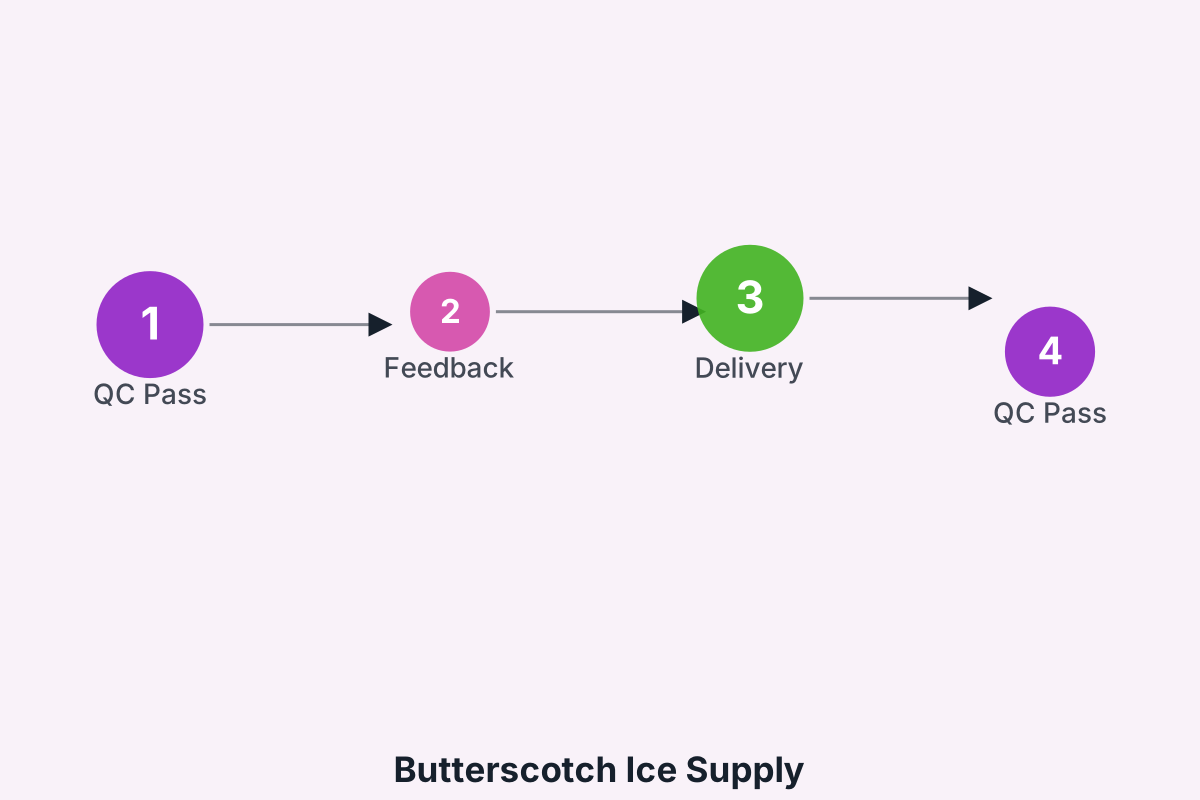
Incoming inspection for butterscotch ice is not about opening boxes at random. We weigh a sample of cartons, check batch codes against the production record, run a draw resistance measurement, and log the results so that a complaint three months later can be traced to a specific run.
- Plan the switch from air to sea freight before you need it.
- Model landed cost, not ex-works price, when comparing quotes.
- Start with a mixed carton and let your own sell-through decide.
- Check carton dimensions against your freight quote before confirming.
- Ask how the factory measures puff count, then compare like with like.
Pricing and Margin
Build butterscotch ice price tiers around order sizes your customers actually place. Tiers that only make sense on a spreadsheet get ignored, and you end up discounting ad hoc instead.
Indicative reference points for planning purposes: entry tier from USD 1.57 per unit at 1000 units, mid tier at USD 0.75, and volume tier at USD 0.82 for full container quantities. These figures move with specification, packaging and freight, so treat them as a shape rather than a quote.
Practical Checklist
- Keep sealed retained samples from every production batch.
- Model landed cost, not ex-works price, when comparing quotes.
- Check carton dimensions against your freight quote before confirming.
- Agree the tolerance band in writing before approving artwork.
- Start with a mixed carton and let your own sell-through decide.
- Ask how the factory measures puff count, then compare like with like.
Frequently Asked Questions
What information do you need to quote?
Target specification, approximate quantity, destination and any packaging requirement. With those four we can usually come back with a costed option the same working day rather than a request for more information.
Is there support for in-store material?
Yes. Shelf talkers, counter cards and simple planogram suggestions are available for butterscotch ice ranges that reach a sensible volume. Most retailers find the plain strength and flavour cards do the most work.
Do you hold stock for regular customers?
For established programmes we can reserve production slots and, in some cases, hold finished butterscotch ice stock against a forecast. It removes most of the lead time risk from a reorder and is worth discussing once volumes are stable.
What if I only need a small first order?
That is normal and sensible. A mixed carton lets you test butterscotch ice in your own market before committing to a production run, and the specification you approve at that stage carries through to larger orders unchanged.
How are price changes handled on repeat orders?
{K} pricing is reviewed against input costs and volume rather than adjusted casually. Any change is confirmed in writing before the next order is scheduled, with the reason stated so you can judge it yourself.
Next Step
Send us your current butterscotch ice specification even if you are not planning to move suppliers. A second read of a document you use every month is usually worth the ten minutes.
Related Reading
- Butterscotch Ice Packaging Waste and Recycling Options — UK and Ireland
- Butterscotch Ice Product Photography for Listings — Small Batch Buyers
- Butterscotch Ice Finish Options and Perceived Quality — Small Batch Buyers
- Butterscotch Ice Loyalty Effects in Repeat Categories — Step by Step
- Butterscotch Ice Monthly Review Ritual for Buyers — Three Price Tiers
- Butterscotch Ice Trade Credit and Account Terms — a Factory Floor View