 VapeWholesaleHub
Butterscotch Ice Customer Education That Reduces Complaints — Retail Chains
The price difference between two butterscotch ice quotes is often smaller than the cost of one failed shipment. This overview is written for buyers who would rather understand the failure modes up front than discover them after customs clearance.
The Specification That Matters
Pay attention to how a butterscotch ice supplier responds when you ask for a tolerance they do not want to commit to. The hesitation is usually more informative than the eventual answer.
| Product category | Open system |
|---|---|
| Resistance band | 0.8 - 1.0 ohm |
| Capacity tolerance | +/- 5% |
| Puff count method | Declared by capacity |
| Master carton | 400 units |
| Carton weight | 11.1 kg |
| Shelf life | 12 months |
| Storage | 15-25 C, dry, away from direct light |
Quality Control in Practice
Train whoever receives butterscotch ice cartons to note anything unusual at the point of unloading. Damage discovered at the dock is a freight claim; damage discovered a week later is your problem.
AQL sampling gets a lot of attention, but for butterscotch ice the more useful habit is simply measuring the same three things on every single batch. Trend lines catch problems that pass/fail checks miss.
- Write the complaint threshold into the order terms.
- Agree the tolerance band in writing before approving artwork.
- Confirm the current customs classification with your own broker.
- Check carton dimensions against your freight quote before confirming.
- Start with a mixed carton and let your own sell-through decide.
Trends Worth Watching
One shift worth planning for: shorter butterscotch ice reorder cycles with smaller average drops. It favours suppliers with flexible production slots over those who only want large annual commitments.
The butterscotch ice category is consolidating around suppliers who can document what they ship. Buyers who built that requirement into their process early are now finding it much easier to scale.
What Butterscotch Ice Really Costs Landed
Watch the butterscotch ice price you pay over a year rather than per order. Factories respond well to visible volume, and a quarterly review is usually worth more than a hard negotiation each time.
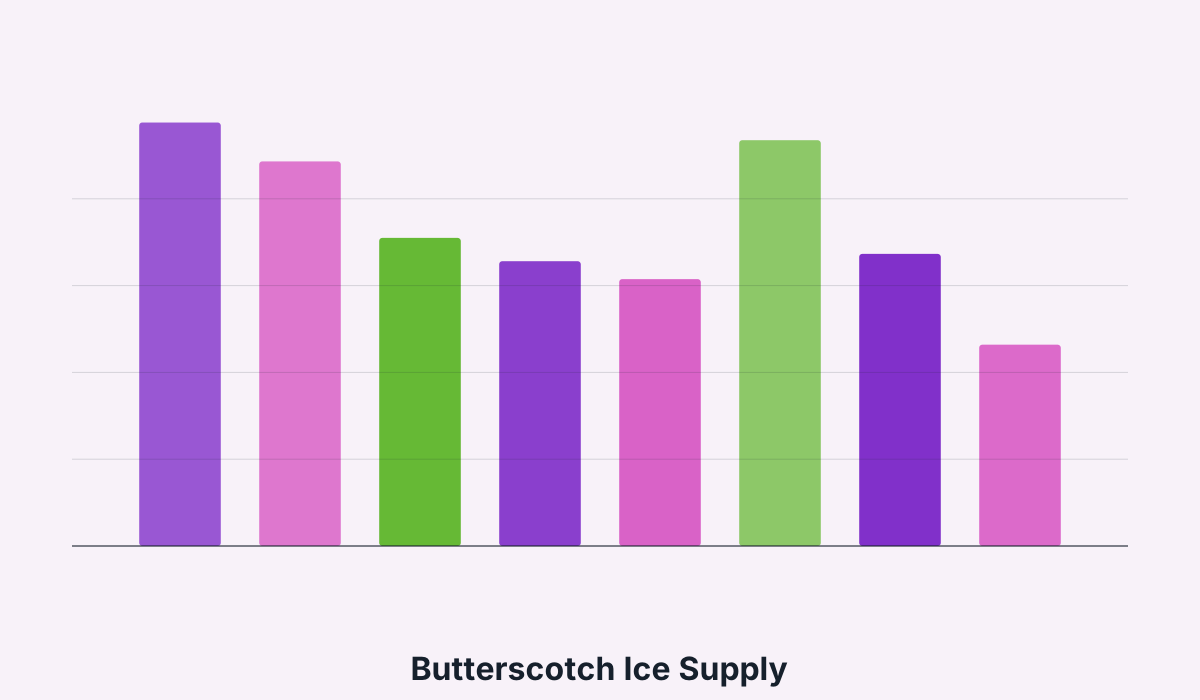
Indicative reference points for planning purposes: entry tier from USD 2.35 per unit at 2000 units, mid tier at USD 0.98, and volume tier at USD 1.32 for full container quantities. These figures move with specification, packaging and freight, so treat them as a shape rather than a quote.
Selling Butterscotch Ice at Store Level
Bundle butterscotch ice with a complementary item rather than discounting it outright. The perceived value holds up better and the second item often becomes a repeat purchase on its own.
Put butterscotch ice where the decision is made, not where the margin is highest. In most stores that means near the counter or at eye level in the category, rather than wherever there is spare space.
Where Butterscotch Ice Sits in the Range
Butterscotch Ice rewards retailers who can explain it in one sentence. If your team needs a paragraph, the range is too complicated for the space it occupies.

Practical Checklist
- Plan the switch from air to sea freight before you need it.
- Start with a mixed carton and let your own sell-through decide.
- Keep sealed retained samples from every production batch.
- Agree the tolerance band in writing before approving artwork.
- Confirm the current customs classification with your own broker.
- Model landed cost, not ex-works price, when comparing quotes.
Frequently Asked Questions
Can the packaging be customised?
Yes. Most butterscotch ice programmes use private label packaging once volumes justify the printing plate. We supply dielines, check your artwork for print issues and hold approved files so reorders need no new setup.
Is there support for in-store material?
Yes. Shelf talkers, counter cards and simple planogram suggestions are available for butterscotch ice ranges that reach a sensible volume. Most retailers find the plain strength and flavour cards do the most work.
What happens if my market changes its rules?
Regulations move, and packaging or documentation sometimes has to follow. We keep approved artwork files on hand so that a required change is a reprint rather than a redesign, which keeps the cost and delay down.
Do you provide compliance documents?
Every shipment leaves with the documentation set relevant to your market, including batch records and test reports where required. Your local rules still determine what you must file, so confirm those with your broker before import.
How should butterscotch ice be stored?
Cool, dry and out of direct sunlight. Heat and light are the two things that shorten shelf life fastest. Rotate stock by batch code rather than by arrival date, and keep cartons off concrete floors in humid warehouses.
Next Step
Start smaller than feels comfortable, measure honestly, then scale what worked. That sequence has saved more of our customers money than any negotiation tactic we could suggest.
Related Reading
- Butterscotch Ice Strengths Ladder for a Balanced Cabinet — North America
- Seasonal Planning for Butterscotch Ice Inventory — Private Label Programmes
- Butterscotch Ice Promotional Mechanics That Do Not Erode Value — Entry-Level Price Points
- How to Store Butterscotch Ice Stock Without Losing Freshness — Warehouse Teams
- How to Store Butterscotch Ice Stock Without Losing Freshness — Established Chains
- Butterscotch Ice Bundle Pricing That Moves Older Stock — Before Your Next Order