 VapeWholesaleHub
Common Butterscotch Ice Mistakes New Distributors Make — Container-Scale Orders
A good butterscotch ice programme is boring in the best sense: same taste, same draw, same carton count, every single time. Getting there requires a shared vocabulary between you and the factory. Consider this page that vocabulary.
Reading a Butterscotch Ice Spec Sheet
Ask any factory for the same butterscotch ice sample twice, three months apart. If the second sample drifts, the production line is running without statistical control and your reviews will drift with it. Consistency over time is a more useful signal than a single good sample.
| Product category | Closed pod |
|---|---|
| Resistance band | 1.0 - 1.2 ohm |
| Capacity tolerance | +/- 5% |
| Puff count method | Machine cycle 2s on / 18s off |
| Master carton | 300 units |
| Carton weight | 8.3 kg |
| Shelf life | 12 months |
| Storage | 15-25 C, dry, away from direct light |
How Butterscotch Ice Fits the Assortment
Range decisions for butterscotch ice should start from shelf space, not from a supplier catalogue. Count the facings you actually have, then decide how many of them this line deserves against what it currently earns.
Category data for butterscotch ice is noisier than it looks. Promotions, weather and local competition all move weekly numbers, so read three months at a time rather than reacting to a single week.
Inspection Before Dispatch
Incoming inspection for butterscotch ice is not about opening boxes at random. We weigh a sample of cartons, check batch codes against the production record, run a draw resistance measurement, and log the results so that a complaint three months later can be traced to a specific run.
- Start with a mixed carton and let your own sell-through decide.
- Plan the switch from air to sea freight before you need it.
- Write the complaint threshold into the order terms.
- Rotate stock by batch code rather than by delivery date.
- Confirm the current customs classification with your own broker.
Logistics That Protect Margin
Ask your forwarder for the butterscotch ice transit history on your lane, not the advertised schedule. The gap between the two is the buffer you should build into your reorder point.
Market Signals
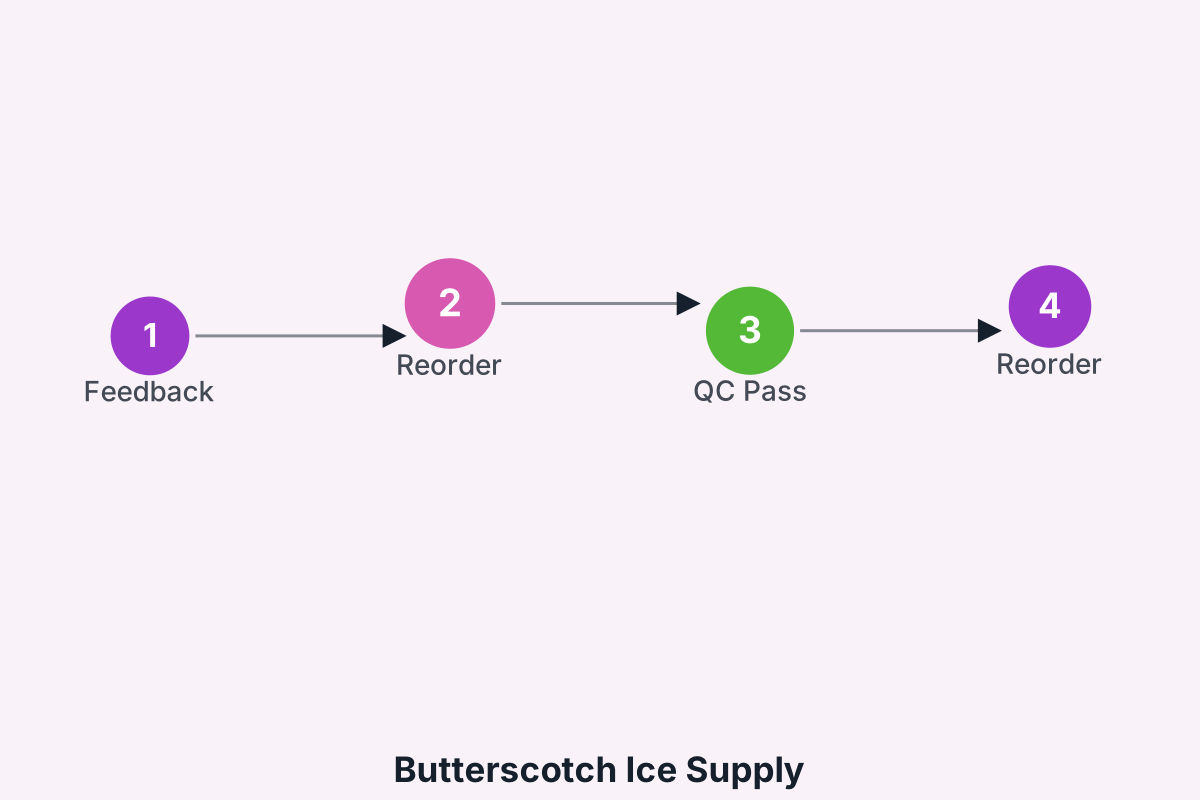
One shift worth planning for: shorter butterscotch ice reorder cycles with smaller average drops. It favours suppliers with flexible production slots over those who only want large annual commitments.
Modelling a Healthy Margin
Margin on butterscotch ice is rarely lost at the till. It is lost through dead stock, returns and emergency air freight. A slightly higher landed cost with predictable lead time usually beats the cheapest quote on the spreadsheet.
Indicative reference points for planning purposes: entry tier from USD 2.13 per unit at 500 units, mid tier at USD 1.09, and volume tier at USD 0.52 for full container quantities. These figures move with specification, packaging and freight, so treat them as a shape rather than a quote.
Practical Checklist
- Rotate stock by batch code rather than by delivery date.
- Check carton dimensions against your freight quote before confirming.
- Agree the tolerance band in writing before approving artwork.
- Model landed cost, not ex-works price, when comparing quotes.
- Write the complaint threshold into the order terms.
- Confirm the current customs classification with your own broker.
Frequently Asked Questions
How do you handle a short shipment?
Cartons are counted and weighed before dispatch and the figures are shared with you. If something is short on arrival, the packing record and the carrier documentation are both available, which keeps the claim straightforward.
What happens if my market changes its rules?
Regulations move, and packaging or documentation sometimes has to follow. We keep approved artwork files on hand so that a required change is a reprint rather than a redesign, which keeps the cost and delay down.
How are price changes handled on repeat orders?
{K} pricing is reviewed against input costs and volume rather than adjusted casually. Any change is confirmed in writing before the next order is scheduled, with the reason stated so you can judge it yourself.
Can you match an existing product I already sell?
Often yes, provided we can measure it properly. Send a physical sample and we will report back on what can be matched, what will differ slightly, and why. An honest gap is more useful than a vague promise.
Next Step
We would rather quote you accurately and lose the order than quote optimistically and lose the relationship. Ask us the awkward questions early.
Related Reading
- Butterscotch Ice Handling, Labeling and Regulatory Paperwork — Cross-Border Trade
- How to Read a Butterscotch Ice Certificate of Analysis — Small Batch Buyers
- Butterscotch Ice Product Listings That Actually Convert — Regional Distributors
- Butterscotch Ice When to Add a Second Factory — Low Minimum Quantities
- Butterscotch Ice Currency and Payment Risk Basics — Step by Step
- Butterscotch Ice Customer Education That Reduces Complaints — Step by Step